Commercial real estate portfolios across Franklin County encounter complex vector challenges originating from shared wall voids, centralized utility chases, and dense tenant turnover cycles. Historic multi-family…
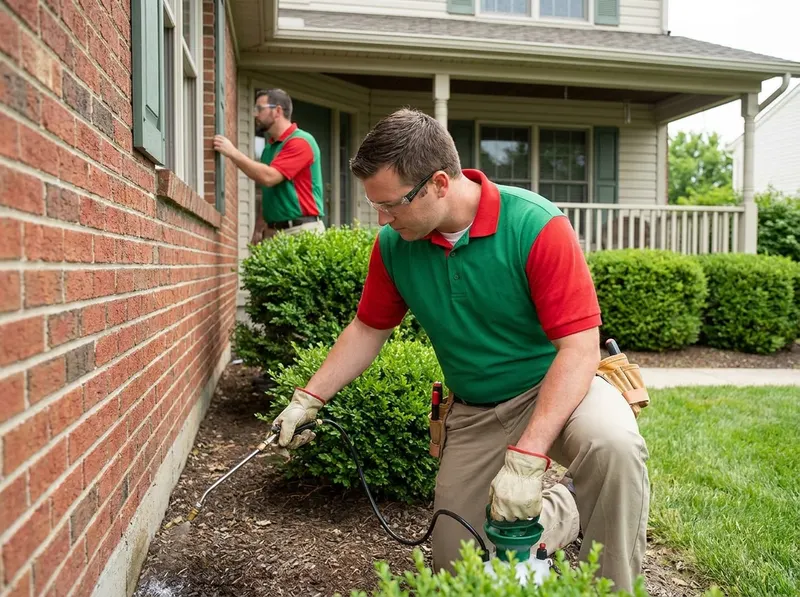
Commercial real estate portfolios across Franklin County encounter complex vector challenges originating from shared wall voids, centralized utility chases, and dense tenant turnover cycles. Historic multi-family dwellings in German Village and Victorian Village present continuous moisture pathways and aging sandstone foundations that permit subterranean entry, while modern student housing clusters bordering the Ohio State University Campus experience persistent cockroach cross-contamination between adjoining kitchen footprints. Managing pest suppression across these environments requires rigorous alignment with the EPA Integrated Pest Management standards, substituting heavy synthetic organophosphate broadcast sprays with targeted micro-injections and perimeter air-barrier sealing. For mixed-use footprints throughout the Short North Arts District and Franklinton, ground-level retail waste zones demand routine sanitization audits to preempt grease-seeking rodents before populations compromise second-story residential floor plans.
Operational protocols rely on botanical active ingredients and mechanical exclusion rather than indiscriminate chemical saturations that compromise ambient indoor air quality. Implementing CDC National Center for Environmental Health guidelines ensures communal hallways and interior dwellings remain free of volatile airborne residues, safeguarding domestic pets and sensitive occupants. Structural auditing focuses heavily on building envelopes, sealing unmeshed foundation vents and plumbing escutcheons in Clintonville duplexes or sprawling residential associations near Worthington Hills using copper mesh and elastomeric sealants. Technicians reference technical guidelines from the Pest Control Technology technical library to calculate reproductive turnover rates under regional humidity variations, eliminating breeding nodes within subfloors without causing tenant evacuation delays or lingering chemical odors.
Every structural inspection follows a standardized, reproducible sequence to ensure comprehensive unit coverage and complete regulatory documentation:
Portfolio managers operating townhomes in Grandview Heights, multi-family brownstones in Olde Towne East, or detached rentals in Upper Arlington and Bexley require regulatory defensibility without getting locked into rigid recurring billing contracts. All procedures conform to commercial pesticide operator standards outlined by the Ohio Department of Agriculture Pesticide Regulation Division, fulfilling local housing safety benchmarks established under the Columbus Public Health environmental code. Structural waste storage zones adhere to municipal guidelines supervised by the Solid Waste Authority of Central Ohio to limit exterior rodent pressure. Diagnostic operations reference the Ohio State University Extension integrated pest platform for regional life-cycle predictions, supported by structural integrity frameworks established by the HUD Office of Lead Hazard Control and Healthy Homes, building safety parameters from the Building Owners and Managers Association, and workplace ventilation protections from the Occupational Safety and Health Administration. Service arrangements remain entirely operational on an as-needed basis; telephone scheduling is accessible at (380) 255-6029.
Every job gets a firm, written price after an on-site visit.
Tell us about your property management pest programs job in Columbus and we'll send a clear, written quote, usually the same day.
 TerraBloom Extermination